The light keeps moving.
Twelve hours, each with its own nine colours, blending one into the next while you fly. They are skies, not places — and that distinction is the whole design.
Twelve hours
Each panel below runs the game’s terrain function under that hour’s palette. The colours are not sampled from screenshots — they are the same nine hex values the game reads at runtime.
- 01First lightEvery run opens here
- 02Morning airReached by staying alive
- 03Blue noonReached by staying alive
- 04Golden hourA long run reaches it
- 05Last lightA very long run reaches it
- 06Violet hourReached by staying alive
- 07Deep night252 s of unbroken play
- 08StarlightReached by staying alive
- 09Storm lightReached by staying alive
- 10White airReached by staying alive
- 11First snowReached by staying alive
- 12Ember skyReached by staying alive
Nine slots per hour: three sky stops, four silhouette distances, the accent and the glow
Skies, not places
The obvious version of this feature announces a biome: Storm Land discovered. That would be a lie three times over. There is no land — one continuous terrain function, the same props at every distance. There is no discovery — the hour arrives on a clock, and the only agency is still being alive when it does. And there is nothing to go back to.
So reaching an hour you have never flown under puts one line over the world: a caption, and the name beneath it. Lowercase phenomena, observed rather than invented — the same register the goal book already used when it asked you to fly until golden hour.
Weather is an event
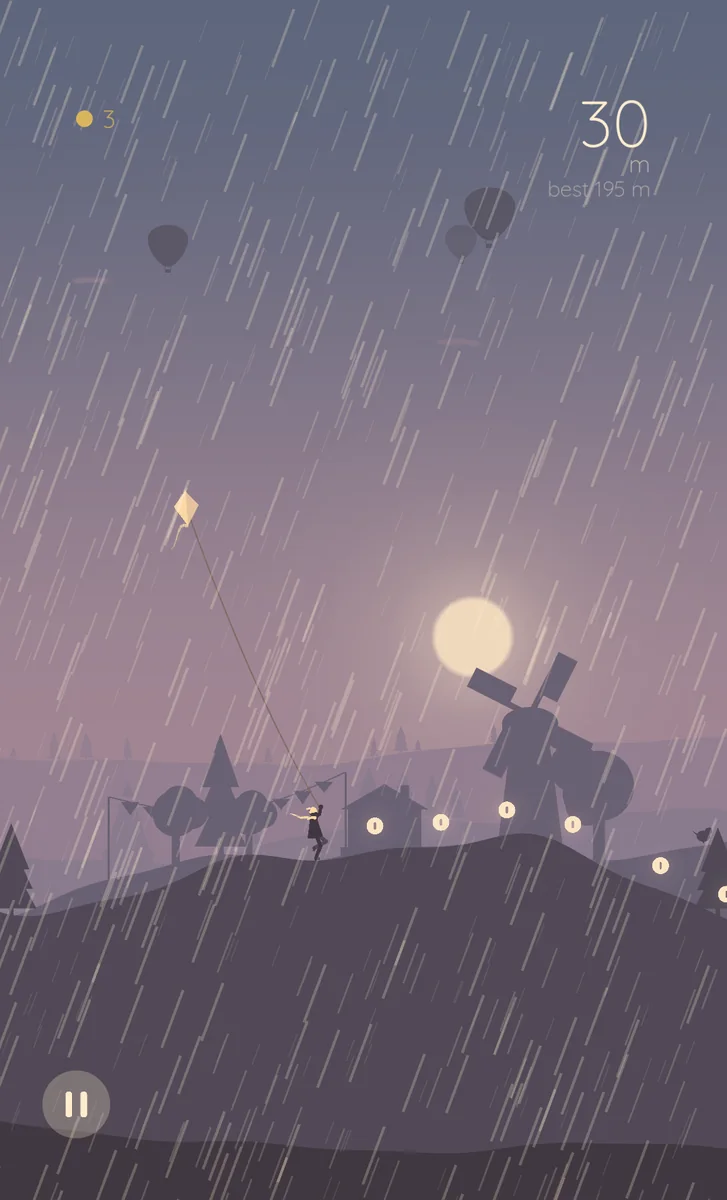
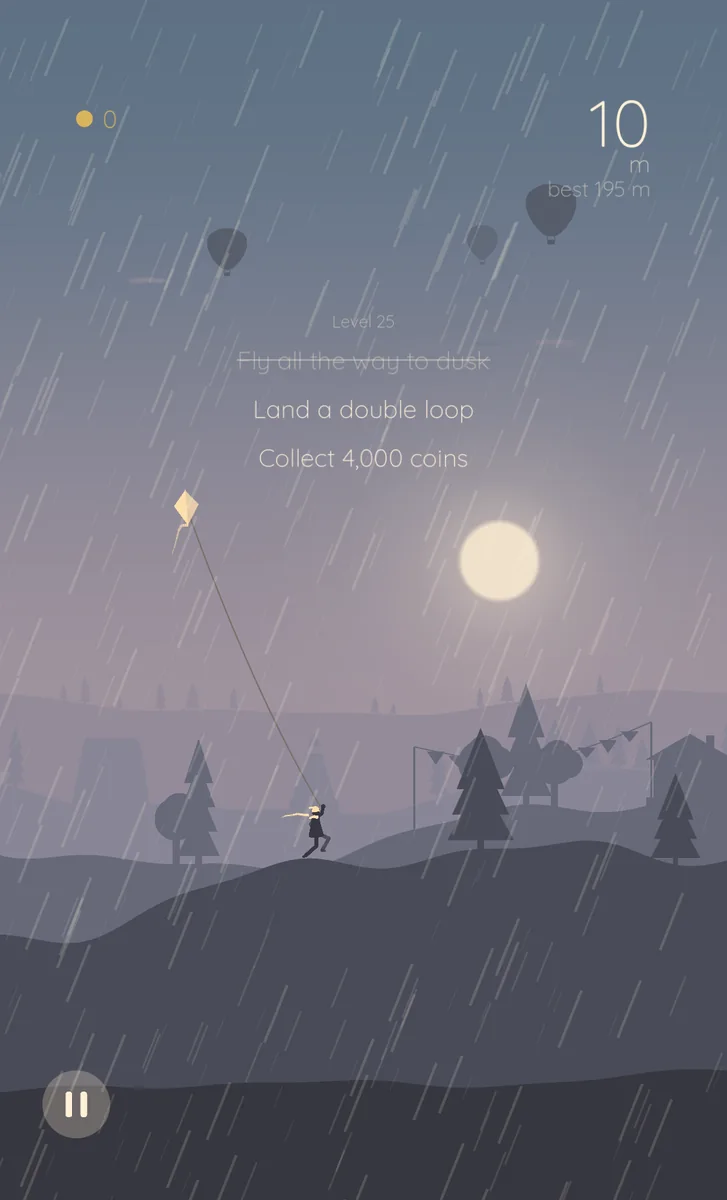
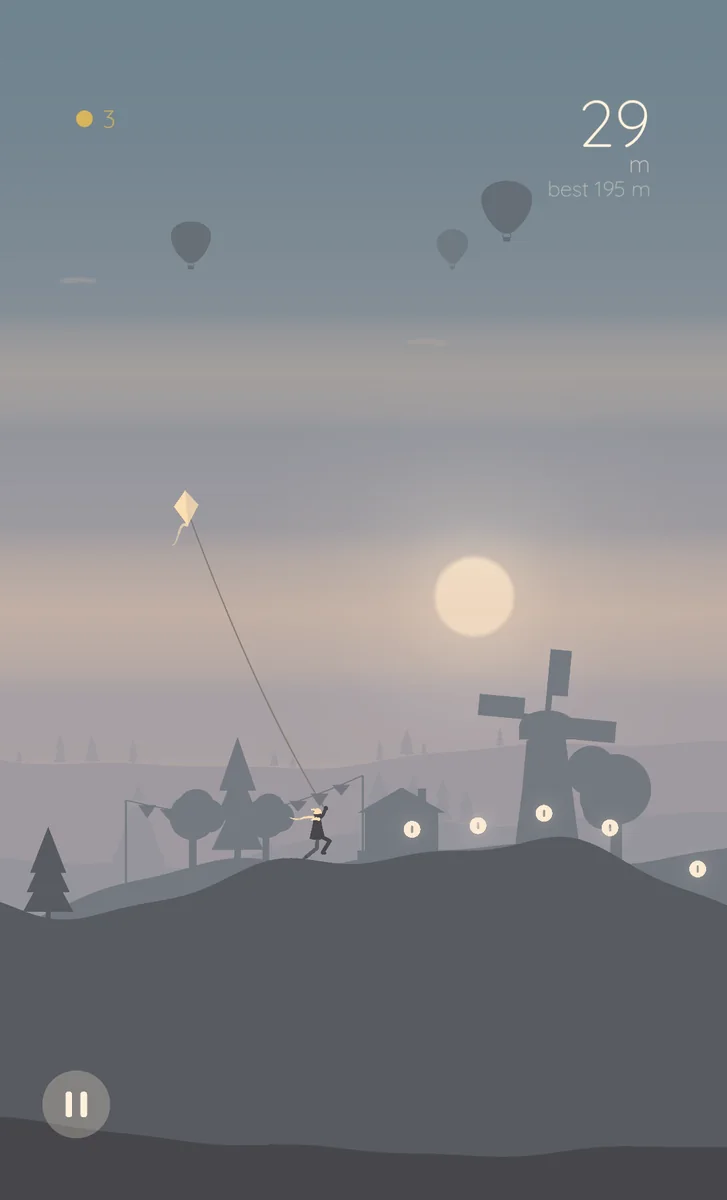
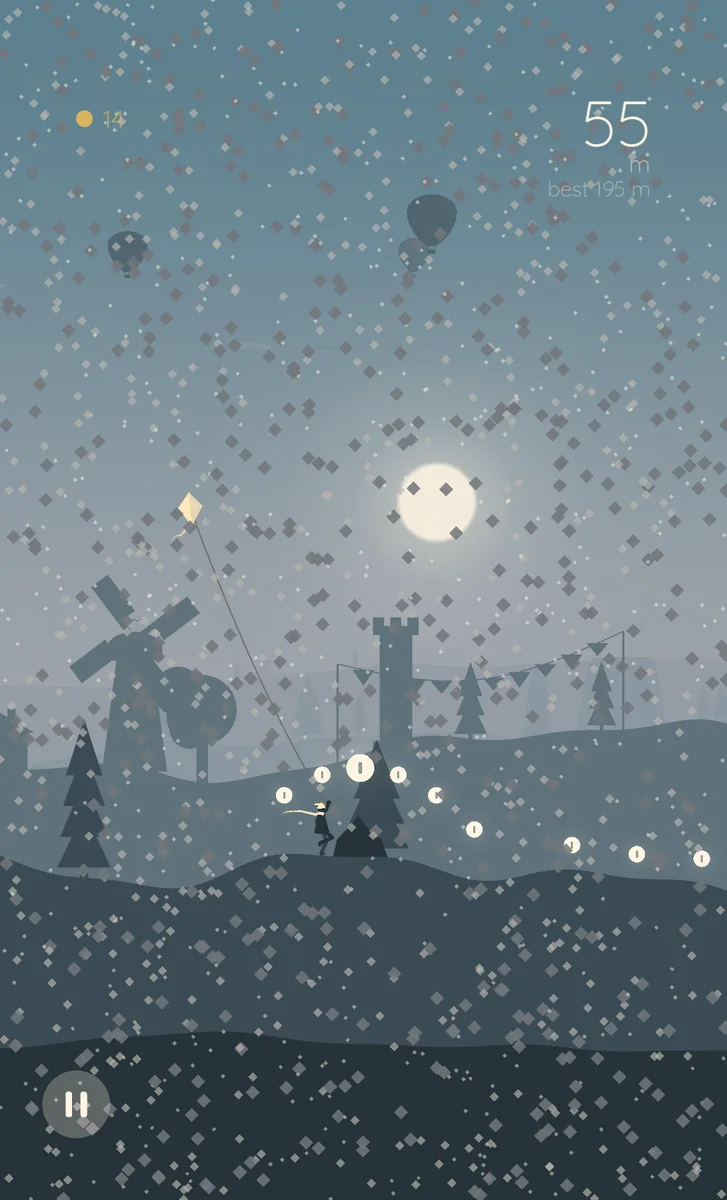
Rain, storm, fog and snow arrive on their own clock — the first somewhere in the first eighteen to forty-four seconds, then gaps and events, one kind at a time, always crossfading through the same window.
It used to be a pure function of the palette clock, which against a median run of about forty-five seconds meant most runs got no weather at all. The rain existed, was correct, and almost nobody saw it.
| Run length | Events seen | Kinds reachable |
|---|---|---|
| 22 s | 0.05 | — |
| 54 s | 1.00 | All four |
| 110 s | 1.80 | All four |
Ember sky is the twelfth, and almost nobody sees it.
Getting there takes the better part of nine unbroken minutes. Most runs end somewhere in the first three hours of the day — which is what makes the last few worth flying toward.